Yükseköğretim ve Bilim Dergisi
Makale
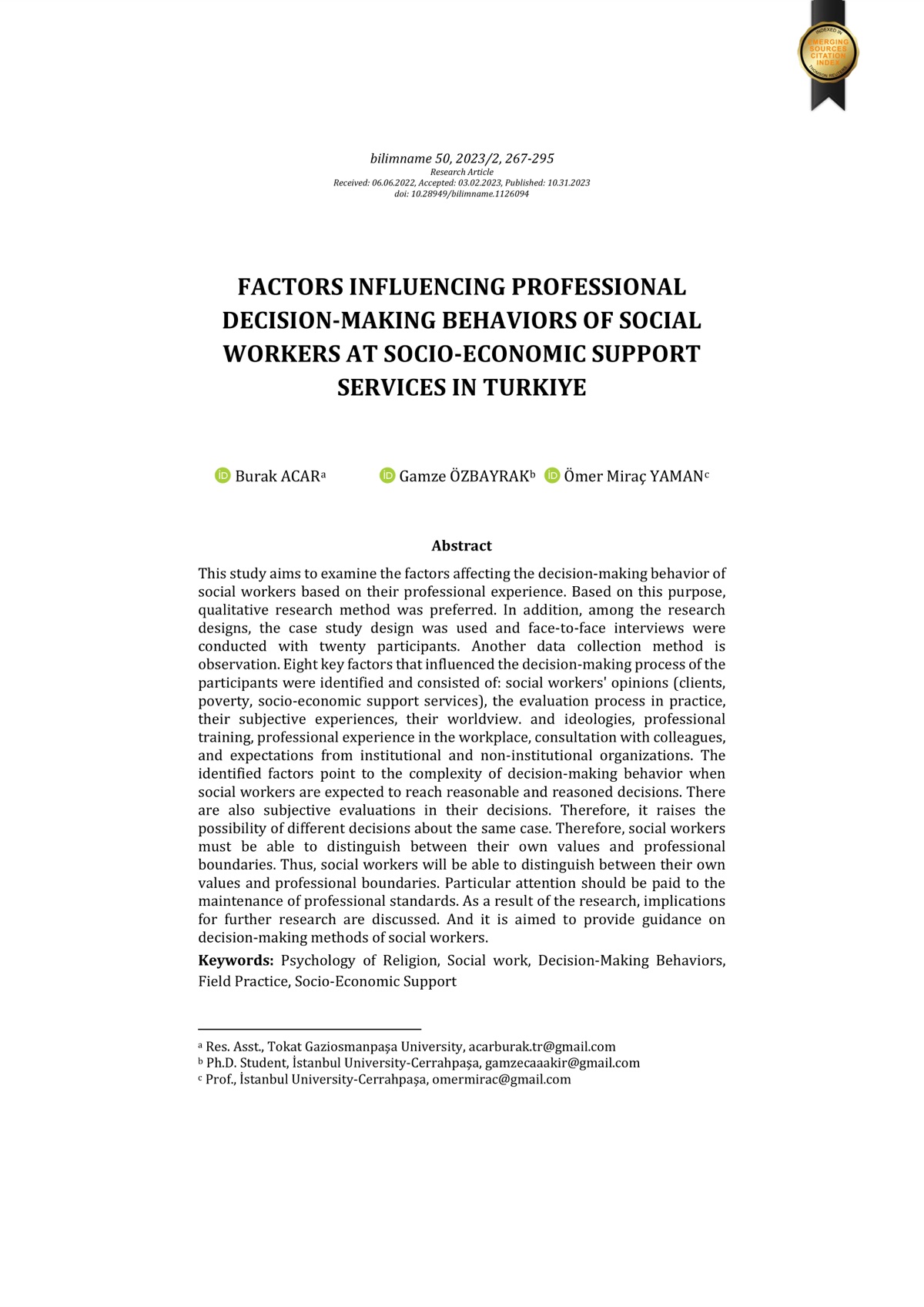
Factors Influencing Professional Decision-Making Behaviors of Social Workers at Socio-Economic Support Services in Turkey
- YazarlarBurak AcarGamze ÖzbayrakÖmer Miraç Yaman
- DergiBilimname
- Yıl2023
- Cilt / Sayı50
- Sayfalar267-295
- DOI
Özet (Abstract)
This study aims to examine the factors affecting the decision-making behavior of social workers based on their professional experience. Based on this purpose, qualitative research method was preferred. In addition, among the research designs, the case study design was used and face-to-face interviews were conducted with twenty participants. Another data collection method is observation. Eight key factors that influenced the decision-making process of the participants were identified and consisted of: social workers' opinions (clients, poverty, socio-economic support services), the evaluation process in practice, their subjective experiences, their worldview. and ideologies, professional training, professional experience in the workplace, consultation with colleagues, and expectations from institutional and non-institutional organizations. The identified factors point to the complexity of decision-making behavior when social workers are expected to reach reasonable and reasoned decisions. There are also subjective evaluations in their decisions. Therefore, it raises the possibility of different decisions about the same case. Therefore, social workers must be able to distinguish between their own values and professional boundaries. Thus, social workers will be able to distinguish between their own values and professional boundaries. Particular attention should be paid to the maintenance of professional standards. As a result of the research, implications for further research are discussed. And it is aimed to provide guidance on decision-making methods of social workers.
İlgili Makaleler
-
 2023
-
 2023
Bingöl Üniversitesi İktisadi ve İdari Bilimler Fakültesi Dergisi
Orta ve Alt Gelir Grubu Ailelerde Yatırım Deneyimleri: Kripto Paralar ve Maddi Kayıplar
-
 2023
Gümüşhane Üniversitesi Sağlık Bilimleri Dergisi
Türkiye’deki Suriyelilerin Geleceğine İlişkin Göç Politikasına Saha Çalışanlarının Bakışı: Nitel Bir Araştırma
-
 2023
Dini Araştırmalar
Türkiye’de Dini Yönelimli Geleneksel Şifacıların Çalışma Deneyimleri, Ruh Sağlığı Alanına ve Uzmanlarına Yönelik Görüşleri