Marmara Üniversitesi Kadın ve Toplumsal Cinsiyet Araştırmaları Dergisi
Makale
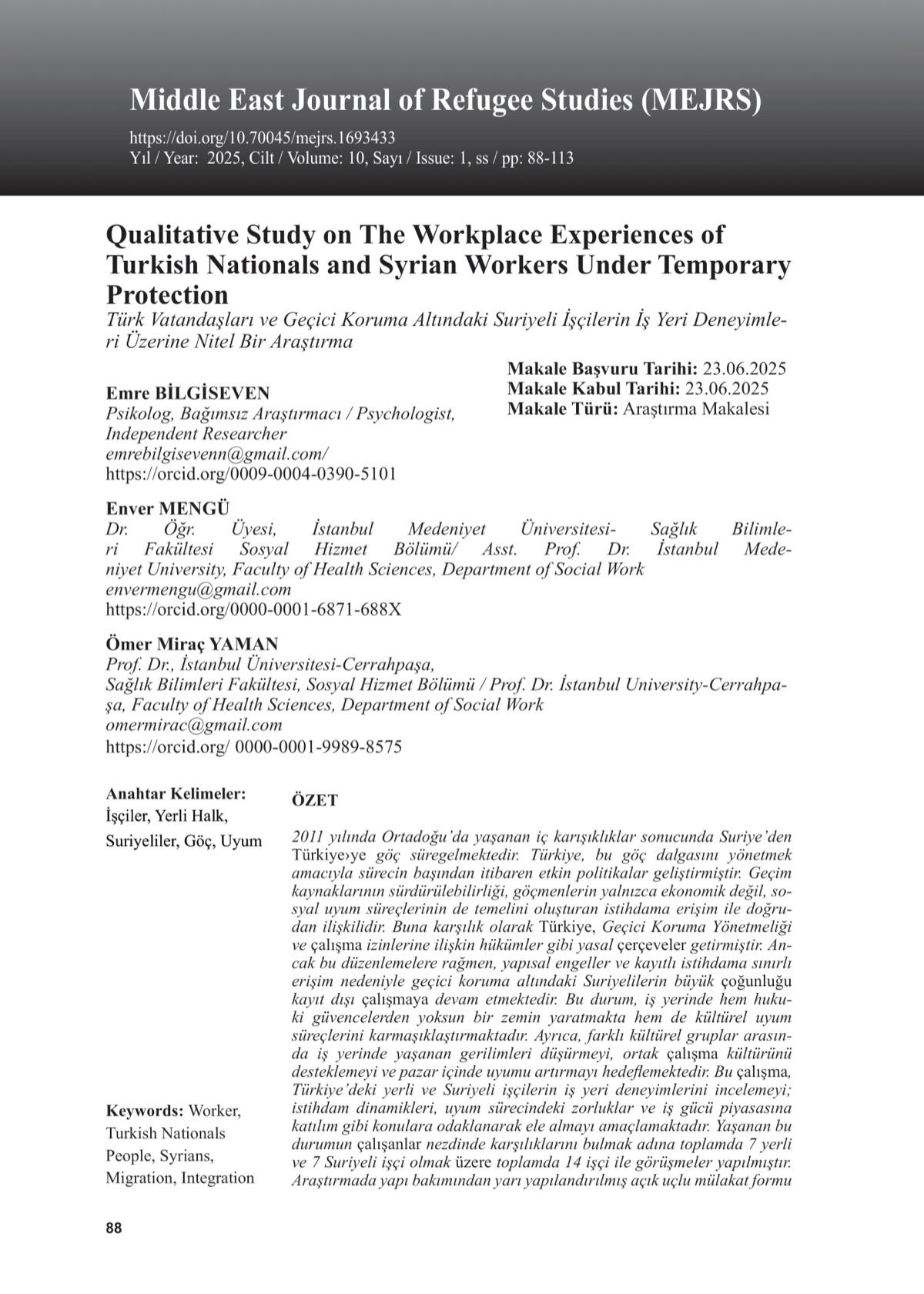
Qualitative Study on the Workplace Experiences of Turkish Nationals and Syrian Workers Under Temporary Protection
- YazarlarEmre BilgisevenEnver MengüÖmer Miraç Yaman
- DergiMiddle East Journal of Refugee Studies
- Yıl2025
- Cilt / Sayı10 / 1
- Sayfalar88-113
Özet (Abstract)
In 2011 civil unrest in the Middle East, migration from Syria to Turkey has persisted. In response, Turkey has actively developed policies to manage this influx from the outset. The sustainability of livelihoods is directly linked to access to employment, which forms the foundation not only for migrants economic independence but also for their social integration processes. In response, Turkey has introduced legal frameworks such as the Temporary Protection Regulation and provisions for work permits. However, despite these regulations, the vast majority of Syrians under temporary protection continue to work informally due to structural barriers and limited access to formal employment. This situation not only creates a lack of legal protection in the workplace but also complicates efforts toward cultural integration. These efforts also focus on reducing workplace tensions between the diverse cultural groups, enhancing the shared work culture and promoting harmonization within the labor market. This study aims to explore the workplace experiences of Turkish nationals and Syrian workers under temporary protection (tp) int Turkey, focusing on employment dynamics, integration challenges and labor market participation. To assess employees’ responses to these challenges, the study conducted interviews with a total of 14 workers, comprising 7 Turkish nationals and 7 Syrian workers under tp. Utilizing a semi-structured, open-ended interview approach, the research aimed to capture detailed insights into their experiences. The findings reveal that job acquisition difficulties, working conditions, workplace dynamics, and prospects for future adaptation are pivotal factors that significantly shape an individual’s career trajectory and perspective. While issues such as occupational health and safety and working conditions of workers constitute a significant percentage of integration and social cohesion efforts, cultural differences, language barriers, and versatility in lifestyle can create difficulties in communication and interaction between Turkish nationalss and Syrian asylum seekers.
İlgili Makaleler
-
 2025
-
 2025
Adıyaman Üniversitesi Sosyal Bilimler Enstitüsü Dergisi
İrrasyonel İnançların Gölgesinde Madde Bağımlılığı: Ebeveyn Perspektifinden Nitel Bir Analiz
-
 2025
İstanbul Gelişim Üniversitesi Sosyal Bilimler Dergisi
Yurtdışı Merkezli Kamu Yayıncılarının YouTube’da Gençlere Yönelik Hazırladıkları Türkçe İçeriklerin Analizi
-
 2025
Addicta: The Turkish Journal on Addictions
Pornography and Masturbation Addictions through the Lens of Self-Help: Insights from NeverFap Academy Members